

World Rivers Day, tributaries and beavers!
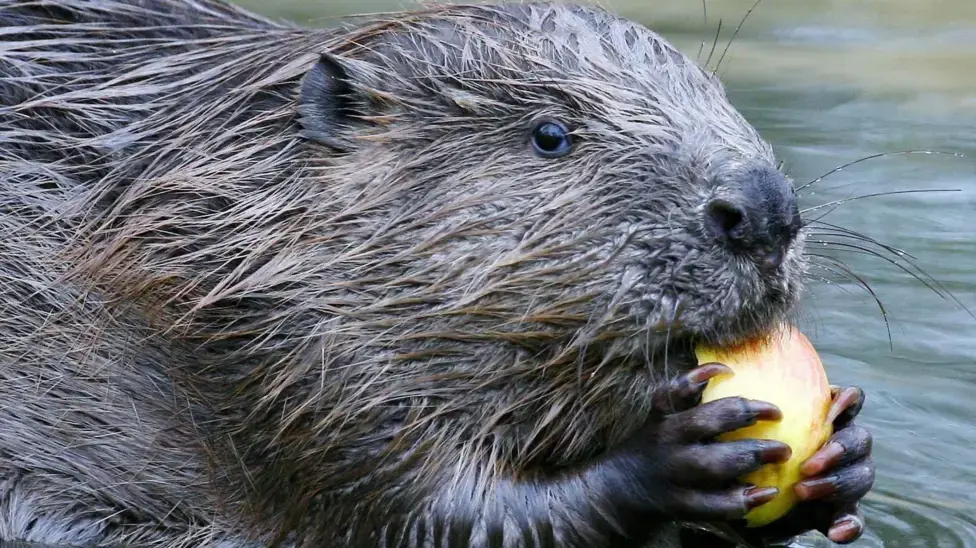
(picture courtesy of BBC website)
This year World Rivers Day will be celebrated by millions of people on Sunday 27th September.
I will be celebrating with the Guardians of the River Chelt at Rivers and Us - conversations around the Chelt and Severn in the Wilson Art Gallery and Museum, Cheltenham on Saturday 26th, and near my home on Sunday 27th, when I will spend time with a tiny stream that eventually finds it way to the Severn Estuary.

The Chelt is a tributary of Hafren and the two contrasting rivers are thus intimately and forever connected. Whilst Hafren is the longest river on mainland Britain, the Chelt is 14 miles (22 kilometers) long , arising from springs near Upper Dowdeswell, not far from the source of the Thames. The Chelt is known as a 'flashy' river - a term which denotes its tendency to sudden rises in water level and associated flooding. Hafren's increasingly frequent and more severe flooding is well-known.
Beavers have a contribution to make to this issue of flooding, as well as to the wider climate and nature crises and the increasing periods of drought between flooding events. As Emily Bowen of the Beaver Trust points out:
"Beavers are a keystone species. They are ecosystem engineers, which means that they can have a massive impact on the landscape around them."
Beaver reintroduction in the Severn Vale in Gloucestershire is now a step closer. The Gloucestershire Wildlife Trust , with funding from the National Lottery, is undertaking a number of managed reintroductions and feasibility studies. The director of Nature Recovery at Gloucestershire Wildlife Trust, Emma Hutchins comments:
"We believe that reintroducing beavers to the Severn Vale will be positive for both people and wildlife, helping to recreate lost habitats, increase biodiversity, and reduce downstream flooding for at-risk properties.
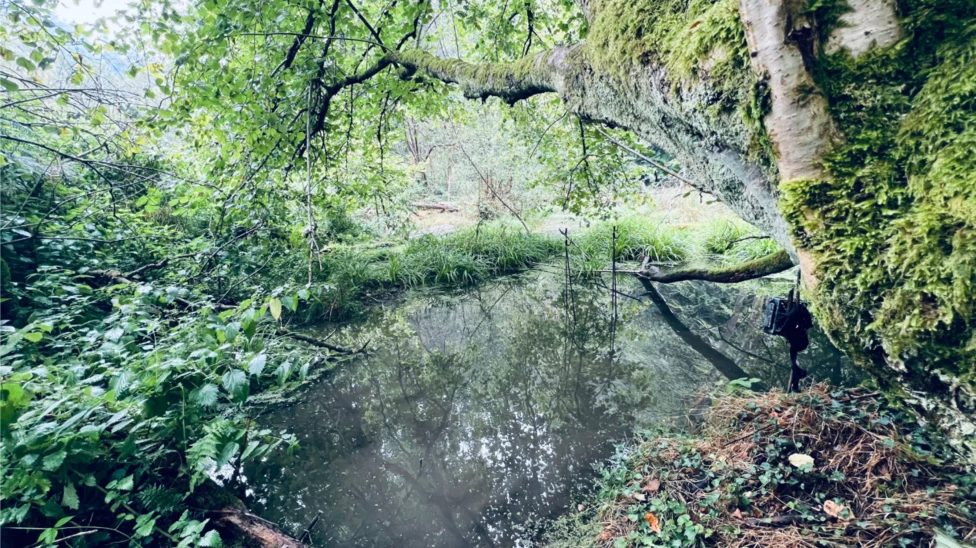
Beaver reintroduction into enclosures in Forest of Dean
- photo courtesy of BBC
Beavers have already been living at Greathough Brook in the Forest of Dean since 2018 and regular surveys have revealed a dramatic increase in biodiversity. Kate Wollen, from Forestry England, comments:
"I've seen stoats, I've seen weasels, I've even seen pine martens. The beavers have created this amazing habitat that has brought in all the insects that are at the bottom of the food chain and then it brings in all the other animals that then feed on them, it's just a whole wonderful network of habitats."
Beaver reintrodcution is not without difficulties For example local landowners are often concerned about damage to trees and localized flooding but the Wildlife Trust is working in consultation with all stakeholders to overcome these understandable worries. I am looking forward to seeing and celebrating the changes made by beavers - perhaps this will be part of future World Rivers day activities. I do hope so.

Enjoy your celebrations at this year's World Rivers Day on Sunday!


Comments